

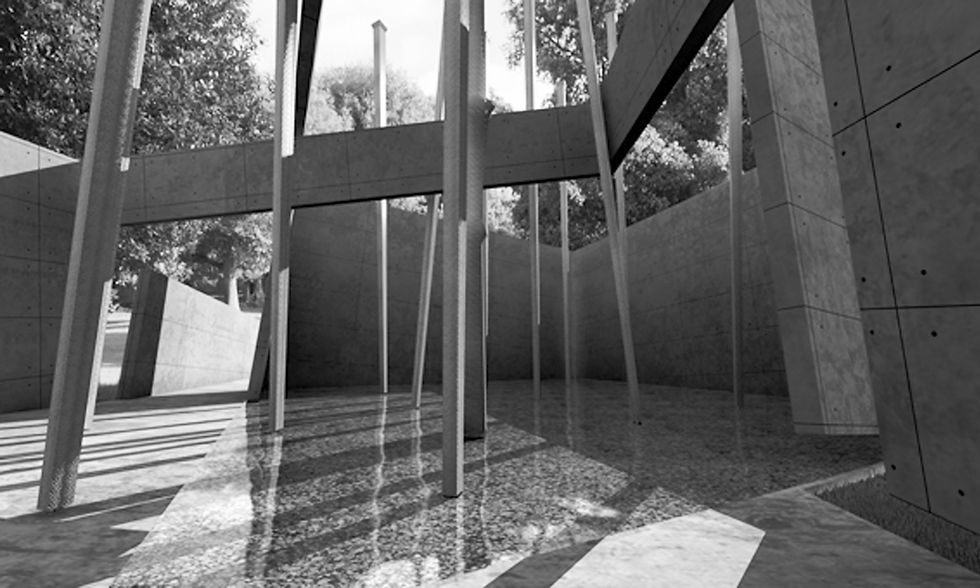
Vision
Architecture begins with an elementary and radical question:
what makes a form necessary in a place?
Fausto Ferrara’s work begins here. Not from the search for a style, an image or an effect, but from the relationship between human being, place and form.
In a world where the built environment increasingly tends to coincide with surface, consumption and representation, Ferrara distinguishes architecture from mere building through a precise criterion: the work must establish a real relationship between the body, matter, light, time and place.
Light does not decorate space: it measures it.
Void is not absence: it constructs distance, threshold and perception.
Matter does not clothe form: it reveals its weight, limit and presence.
Each project therefore begins through a process of listening and separation. What is arbitrary is removed until the form no longer appears as one possible choice among many, but as the one capable of truly belonging to that place.
It is within this condition that silence may also emerge: not as an aesthetic or an atmosphere, but as the consequence of a space that no longer needs to add noise.
Architecture, spatial works and sculpture belong to the same research. The scale changes; the question does not: to give form to a necessary relationship between the human being and the world.
For Ferrara, this research leads to the Inhabitable Work: a work that is not merely observed or used, but can be entered, perceived and inhabited.
